
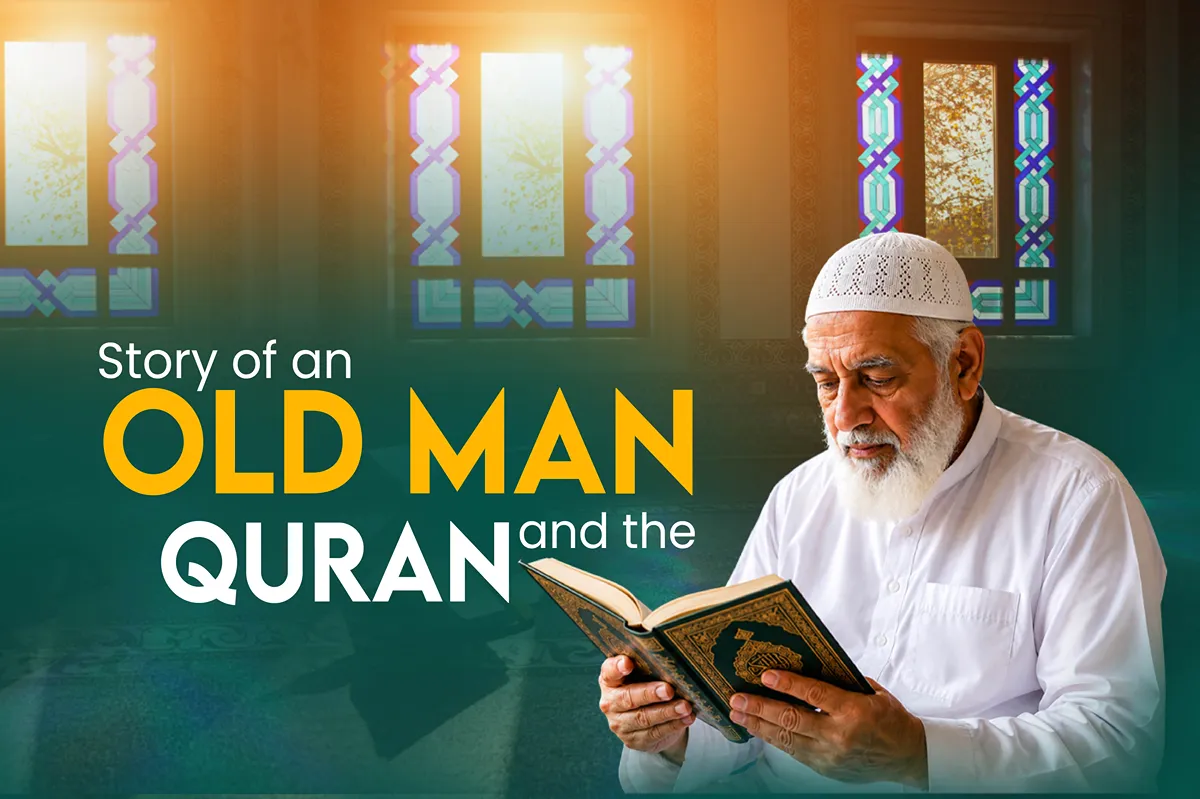
There is a story about an old man and the Quran that has traveled from village to village, from one generation to the next, and it still touches hearts today. It is simple, short, and yet it carries a truth that many people search for their whole lives. This is not a story about magic or miracles. It is a story about faith, patience, and the quiet power of the Quran, even when we feel we are not good enough to hold it.
In this article, we will walk through the full story, look at what it really means, and see how it connects to real life today. We will also talk about the benefits of reading the Quran, simple steps to build a daily habit, common mistakes to avoid, and where a place like Hamid Academy fits into this journey.
Stories like this one survive for a reason. They are easy to remember, they use a picture the mind can hold onto, and they answer a question almost every person asks at some point in their life. Am I doing enough? Is my effort worth anything if I cannot see the result right away? By the end of this article, you will have a clear answer to that question, along with practical steps you can start using today.

The Story of the Old Man and the Quran
The Old Man Who Could Not Read Well
In a small village, there lived an old man. His hands shook, his eyes were weak, and he had spent many years working hard in the fields instead of studying. Late in his life, he felt a strong pull toward the Quran. Every morning, he would sit on the floor with the Book open in front of him, moving his lips slowly over the words.
His reading was far from perfect. He struggled with the letters. He often forgot what he had read only minutes earlier. His grandson, a young boy who was full of questions, watched him every single day.
The Grandson’s Honest Question
One morning, the boy could not hold back his curiosity anymore. He asked his grandfather, “Grandfather, I watch you read the Quran every day, but you always forget what you read. Sometimes you cannot even remember the page you finished yesterday. So what is the point of reading it at all?”
It was an honest question, the kind only a child could ask without fear of sounding rude. The old man did not get upset. He simply smiled and thought for a moment before he answered.
The Wise Answer About the Basket of Coal
The old man told his grandson to take a basket that was used for carrying coal and go down to the river to fill it with water. The boy thought this was a strange request, but he obeyed. He ran to the river, filled the basket, and rushed back home. By the time he arrived, the water had already leaked out through the gaps left by the coal dust.
His grandfather told him to try again, faster this time. The boy ran even quicker, but the same thing happened. The basket was empty by the time he reached the house. After several attempts, the boy gave up and told his grandfather, “It is impossible. The water always leaks out before I get here.”
The old man looked at him gently and said, “You are right, the basket could not hold the water. But look at it closely.” The boy looked down and noticed something surprising. The basket, which used to be black and dirty with coal dust, was now clean. Every trace of coal dust had washed away.
The old man explained, “That is exactly what happens when we read the Quran. We may forget the words. We may not understand every meaning. We may feel like nothing is staying inside us. But every single time we read it, the Quran is cleaning something inside our heart, even if we cannot see it happening.”
The boy stood quietly for a moment, looking at the clean basket in his hands. He had expected his grandfather to admit that the exercise was pointless, yet the opposite had happened. Something real had changed, even though the original goal, carrying water, had failed every single time. This small twist is what makes the story memorable. It does not ask us to ignore the difficulty of reading the Quran. It asks us to notice a different kind of success, one that happens quietly, without applause, and without proof we can hold in our hands the way we can hold a full basket of water.
The Real Meaning Behind This Story
This story is not really about memory or intelligence. It is about the quiet, invisible effect that the Quran has on a person, even when results are not obvious right away. Many people avoid reading the Quran because they feel they will forget it anyway, or they cannot understand the Arabic, or they are not “religious enough” to deserve its benefits.
The old man and the Quran story reminds us that showing up matters more than perfection. The basket did not become useless just because it could not hold water. It became clean. In the same way, a heart does not need to memorize every verse to be softened, calmed, and guided by the Quran.
There is also a quiet message about self judgment inside this story. The boy judged the exercise as a failure because he measured it against the wrong goal. He wanted a full basket of water, not a clean basket. Many people do the same thing with their own worship. They measure their reading against memorization, speed, or fluency, when the real measure might be something softer, such as patience, humility, or a calmer temper later in the day. Changing the way we measure progress changes the way we feel about our own effort.
Why This Old Man and the Quran Story Still Matters Today
We live in a fast world filled with distractions. Phones buzz constantly, work never seems to end, and quiet moments are rare. Many people feel guilty about not reading the Quran regularly because they believe it has to be a long, perfect session with full understanding.
This story pushes back against that idea. It tells us that small, consistent effort matters more than occasional perfection. Just like the boy kept running to the river even though the basket kept leaking, we are encouraged to keep returning to the Quran even on days when we feel distracted, tired, or unsure of the meaning.
Lessons We Can Learn From the Old Man and the Quran
There are several powerful lessons hidden inside this simple story.
- Consistency beats perfection: The old man did not stop reading just because he struggled. He kept showing up daily.
- The heart absorbs more than the mind realizes: Just like the coal basket, our hearts can be affected by the Quran without us noticing it in the moment.
- Age is never a barrier to faith: The old man began this habit later in life, proving it is never too late to build a relationship with the Quran.
- Patience with yourself is part of worship: He did not judge himself harshly for forgetting. He kept a gentle attitude toward his own learning process.
- Simple wisdom often comes from unexpected places: The old man used something as ordinary as a coal basket to teach a life changing lesson.
The Benefits of Reading the Quran Every Day
Reading the Quran daily, even a few verses, brings benefits that go beyond religious duty. Here are some of the most meaningful ones.
- It brings peace to the heart: Many people describe a calm feeling after reading, even without understanding every word right away.
- It builds a lasting habit of discipline: Setting aside time daily for the Quran trains the mind to stay consistent in other areas of life too.
- It strengthens the connection with faith: Regular contact with the Quran keeps a person’s beliefs active rather than distant or forgotten.
- It improves focus over time: As reading becomes a habit, concentration naturally improves, both during recitation and in daily tasks.
- It offers guidance for daily decisions: Many verses speak directly to patience, honesty, kindness, and handling hardship, which apply to everyday situations.
- It becomes an act of remembrance: Even without deep study, simply reciting the words keeps a person spiritually grounded.
Step by Step Guide to Build a Daily Quran Reading Habit
Building a habit like the old man’s does not require huge changes overnight. Here is a simple way to start.
Step 1: Pick a fixed time: Choose a moment in your day that is realistic, such as right after morning prayer or before bed.
Step 2: Start small: Begin with just one page or even a few verses instead of forcing a long session.
Step 3: Use a translation: Reading the meaning alongside the Arabic helps the words feel more personal.
Step 4: Keep the Quran visible: Place it somewhere you will see it daily, such as a bedside table or a spot near your prayer area.
Step 5: Track your progress gently: A simple bookmark or note in a journal can help without turning it into pressure.
Step 6: Read with a soft heart: Do not aim for perfect memorization. Focus on presence rather than performance.
Step 7: Stay consistent even on hard days: Like the old man, keep going even when you feel distracted or forgetful.
Best Practices When Reading the Quran
- Sit in a clean, quiet space when possible.
- Begin with the intention of seeking guidance, not just completing a task.
- Read slowly rather than rushing through pages.
- Reflect briefly on one verse instead of trying to absorb everything at once.
- Pair your reading with a short prayer asking for understanding.
Common Mistakes People Make With the Quran
- Waiting to feel “ready” before starting: Many people delay reading until they feel spiritually prepared, but the old man’s story shows that starting imperfectly is still valuable.
- Comparing their pace to others: Everyone learns and reads at a different speed, and comparison only creates discouragement.
- Giving up after forgetting content: Forgetting is normal and does not erase the benefit of having read.
- Treating it only as an obligation: Approaching the Quran purely out of guilt, rather than love, can make the habit feel heavy instead of comforting.
- Skipping the meaning entirely: Reading only in Arabic without ever checking a translation can limit personal connection to the message.
Expert Tips From Quran Teachers
Experienced Quran teachers often repeat one central idea, small and steady effort outperforms occasional bursts of intense study. They also recommend reading aloud, even quietly, because hearing the words adds another layer of connection beyond silent reading. Many teachers encourage students to choose one short chapter to revisit weekly instead of trying to cover large portions without reflection. Teachers also stress the importance of having proper guidance, especially for beginners who want to learn correct pronunciation and rules of recitation, known as tajweed.
Real Life Examples Inspired by the Old Man and the Quran
Across many communities, people share similar experiences to the old man in this story. A working parent who reads just one page after Fajr prayer before the household wakes up. A student who plays a short recitation during a commute instead of music. An elderly person who cannot read fluently anymore but still traces the words with a finger, finding comfort in the act itself. These small, everyday examples show that the spirit of the old man and the Quran story is still alive in ordinary homes today.
A short case study
Consider a man in his sixties who never learned to read Arabic properly as a child. After retiring, he decided to sit with the Quran for fifteen minutes every morning, following along with a translation and a teacher’s guidance. Within a year, his recitation was still far from perfect, and he still forgot certain rules of pronunciation. Yet his family noticed something else entirely, he had become calmer, more patient with his grandchildren, and less quick to argue over small matters. His progress was invisible on paper but visible in his character, which is the same quiet transformation the old man in the story experienced.
How Hamid Academy Helps People Connect With the Quran
Many people relate deeply to the old man in this story because they also feel unsure about where to begin or how to improve their recitation. This is exactly where a structured learning environment like Hamid Academy can help. Hamid Academy focuses on guiding students of all ages through proper Quran reading, correct pronunciation, and steady memorization, following a pace that respects each learner’s ability rather than rushing them.
For someone who feels like the old man in the story, unsure, slow, or worried about forgetting, having a supportive teacher through a place like Hamid Academy can turn a private struggle into a guided journey. It removes the isolation that many beginners feel and replaces it with structured, patient support, which mirrors the very lesson the story teaches.
Summary
The story of the old man and the Quran teaches a timeless truth. Even when we forget the words, even when we feel unqualified, the simple act of returning to the Quran leaves a mark on the heart, just like water cleaning a coal stained basket. This story encourages patience, consistency, and self compassion in our spiritual journey. Whether through personal daily practice or guided learning with a place like Hamid Academy, the goal is the same, staying connected to the Quran, one small step at a time.
Conclusion
The old man and the Quran story is more than a simple tale passed down through generations. It is a gentle reminder that spiritual growth does not always look like visible progress. Sometimes it looks like showing up daily, forgetting, and returning anyway. If this story moved you, consider starting your own small daily habit today, even one page is enough to begin cleaning the basket.
Frequently Asked Questions
1. What is the story of the old man and the Quran about?
It is a story about an old man who reads the Quran daily despite forgetting most of it. He teaches his grandson that reading the Quran still purifies the heart, using the example of a coal basket that becomes clean after being filled with water repeatedly, even though the water always leaks out.
2. Why does the old man use a coal basket in the story?
The coal basket represents the human heart. Even though the basket cannot hold water, the act of carrying water repeatedly washes away the coal dust. This shows that reading the Quran cleans the heart, even without full memorization or understanding.
3. What is the main lesson of the old man and the Quran story?
The main lesson is that consistency and effort matter more than perfect memory. Reading the Quran regularly benefits the heart even when we forget the words shortly after reading them.
4. Should I still read the Quran if I forget what I read?
Yes, Forgetting is a normal part of learning. The story shows that the benefit of reading comes from the act itself, not only from perfect retention.
5. Is it too late to start learning the Quran as an adult?
No, The old man in the story begins this habit late in life, showing that age is never a barrier to building a relationship with the Quran.
6. How can I build a daily Quran reading habit like the old man?
Start small, pick a consistent time, use a translation, and focus on showing up daily rather than reading large amounts occasionally.
7. What are the benefits of reading the Quran every day?
Daily reading brings inner peace, builds discipline, strengthens faith, improves focus, and offers guidance for everyday situations.
8. Can children understand the old man and the Quran story?
Yes, The story is simple enough for children to follow, and it teaches them the value of patience and consistency in a relatable way.
9. How does Hamid Academy relate to this story?
Hamid Academy offers structured Quran learning support for people who relate to the old man’s struggle, helping beginners build correct reading habits with patient, guided instruction.
10. What is the deeper meaning behind the old man and the Quran story?
The deeper meaning is that spiritual effort is never wasted. Even invisible progress, like a cleaned heart, matters more than visible achievements like perfect memorization.


