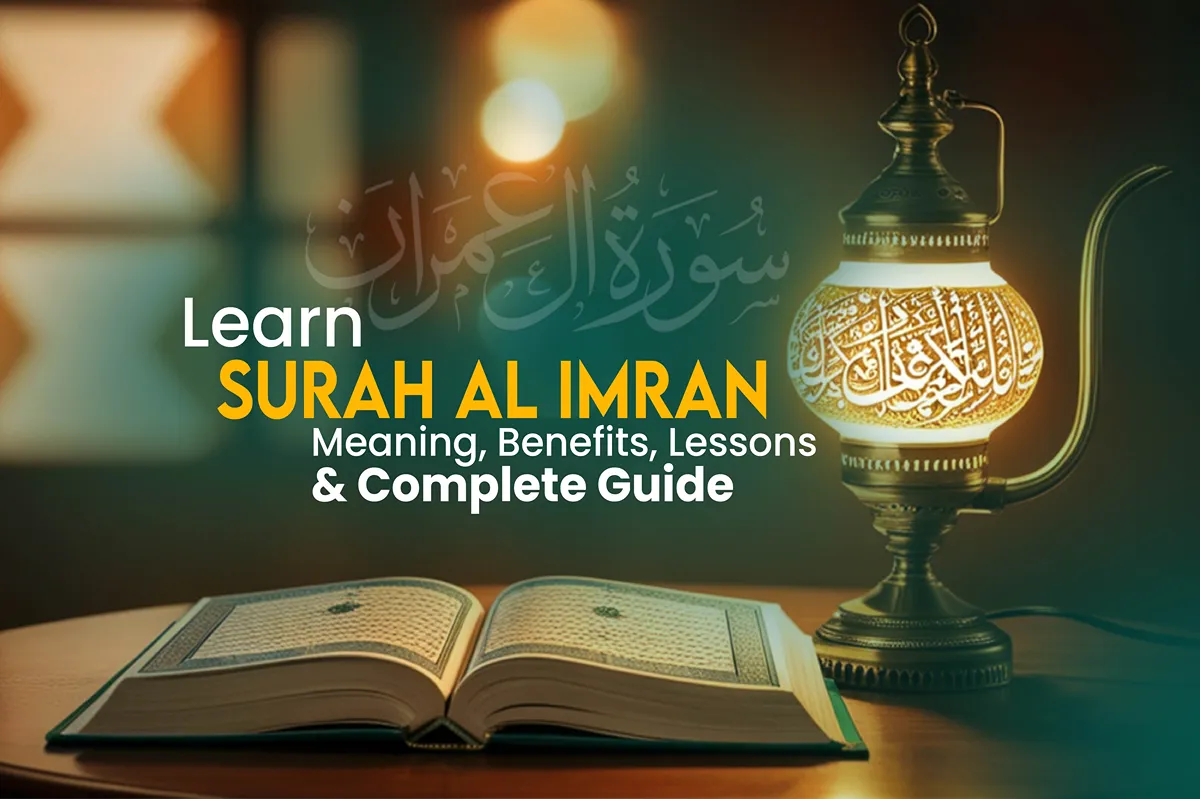
Surah Al Imran is the third chapter of the Quran, and it is one of the longest and richest surahs in the whole book. It has two hundred verses, and it sits in the third and fourth parts (juz) of the Quran. Many students of the Quran know this surah for its deep lessons about faith, patience, and trust in Allah.
If you have ever wondered what Surah Al Imran means, why it carries that name, or what benefits come from reading it, this guide will walk you through everything in plain and simple English. At Hamid Academy, we believe that understanding the Quran should never feel complicated. This article breaks down Surah Al Imran into easy parts so that any reader, whether new to the Quran or already familiar with it, can follow along and take something useful away.
What Does Surah Al Imran Mean
The name Al Imran means “The Family of Imran.” Imran was the father of Maryam, the mother of Prophet Isa (Jesus). The surah gets its name from this family because it tells part of their story, including the birth of Maryam and later the birth of her son, Isa.
It is worth noting that the surah is not only about the family of Imran. That name simply marks the chapter, much like the names of many other surahs in the Quran. The actual content of Surah Al Imran is far wider. It touches on faith, the oneness of Allah, guidance for believers during hard times, and important events from early Islamic history.

Where and When Was Surah Al Imran Revealed
Surah Al Imran is a Madani surah, which means it was revealed after the Prophet Muhammad moved to Madinah. It was not revealed all at once. Instead, it came down in stages over a period of time, and scholars generally divide it into a few main sections based on when each part was revealed.
The first part of the surah is connected to the Battle of Badr, an early and important battle for the Muslim community. Another part was revealed around the time a group of Christians from Najran visited the Prophet in Madinah to discuss matters of faith. A later part of the surah was revealed after the Battle of Uhud, which was a difficult and testing time for the early Muslims.
Because of this background, Surah Al Imran often speaks directly to real events that the early Muslim community faced. It offers comfort, correction, and guidance based on what actually happened to them, which makes its lessons feel practical rather than abstract.
The Story Behind the Name
The surah opens with the story of the wife of Imran. She had prayed for a child and promised to dedicate that child to the service of Allah. She expected a son, but she was blessed with a daughter instead, whom she named Maryam.
Maryam grew up under the care of Prophet Zakariya, and her story is closely tied to his own. Zakariya, seeing the blessings that Maryam received, prayed for a child of his own even though he was old and his wife was unable to have children in the usual way. His prayer was answered with the birth of Prophet Yahya (John).
Later in the surah, the story moves to Maryam receiving news of her own son, Isa, through the angels. This part of Surah Al Imran gives Muslims a respectful and clear account of the birth of Isa, and it also addresses common questions and disagreements that Christians and Muslims may have about him.
The Prophet Muhammad is reported to have praised Maryam highly, calling her one of the best women of her time. This shows how much honor the Quran gives to her and her family, and why the surah carries their name.
Major Themes Covered in Surah Al Imran
Surah Al Imran covers a wide range of topics. Some of the main themes include:
- The oneness of Allah: The surah repeats and strengthens the message that there is only one God, and that all true religion calls people to worship Him alone.
- Guidance for the People of the Book: Large sections speak directly to Jews and Christians, inviting them to common ground based on shared belief in one God.
- Lessons from Badr and Uhud: The surah reflects on both the victory at Badr and the trial at Uhud, teaching believers how to respond to both success and hardship.
- Patience during difficulty: Many verses encourage believers to remain patient and steady, even when things do not go the way they hoped.
- The reality of the afterlife: The surah reminds readers that this worldly life is temporary and that every soul will eventually return to Allah.
- Unity among believers: Several verses call on Muslims to hold together and avoid division, especially during times of pressure from outside groups.
These themes are not separated into neat boxes within the surah. They flow into each other, which is part of why reading Surah Al Imran carefully, rather than quickly, brings out so much meaning.
Benefits of Reading Surah Al Imran
Many scholars and teachers point to specific virtues connected with Surah Al Imran, especially when it is read alongside Surah Al Baqarah, the second chapter of the Quran. The Prophet Muhammad is reported to have described these two surahs as being like two clouds or two shining lights that will come on the Day of Judgment to support the people who used to recite them regularly.
Beyond this reported virtue, reading Surah Al Imran brings several practical benefits for daily life:
- It strengthens belief in the oneness of Allah through repeated and clear reminders.
- It builds patience by showing how the early Muslims handled both victory and loss.
- It offers comfort during hard times, since parts of the surah were revealed right after a painful event, the Battle of Uhud.
- It improves understanding of Islamic history, since the surah references real events and real people.
- It teaches respectful communication with people of other faiths, based on the sections addressing the People of the Book.
- It encourages regular Quran habits, since longer surahs like this one reward those who set aside steady time to read a little each day.
Key Lessons From Surah Al Imran
There are many lessons packed into this surah, but a few stand out clearly for everyday life.
Trust in Allah’s plan, even after setbacks: The Battle of Uhud did not go the way the Muslims had hoped, yet the surah teaches that setbacks are part of a bigger plan and should not shake a believer’s faith.
Unity matters more than pride: Several verses warn against division and remind believers that standing together is stronger than standing apart.
Every soul will taste death: This simple but powerful reminder appears in the surah and encourages readers to focus on what truly matters instead of chasing only worldly gain.
Good character earns lasting reward: The surah praises those who are patient, honest, and generous, showing that outward success is not the only measure of a good life.
Speak with wisdom to people of other beliefs: The sections addressing Christians and Jews model a tone of respect and clear reasoning rather than harsh argument.
Famous Verses in Surah Al Imran
Verse 8: The Prayer for a Firm Heart
This verse contains a prayer asking Allah not to let the heart wander after it has been guided, and asking for mercy from Him. Many Muslims memorize and repeat this prayer, especially during times of doubt or difficulty, since it asks directly for steadiness in faith.
Verse 26: The Owner of All Power
This verse describes Allah as the one who holds all control, who gives power to whoever He wills and removes it from whoever He wills. It is often recited as a reminder that success and failure in this world are ultimately in Allah’s hands, not simply the result of human effort alone.
Verse 185: Every Soul Will Taste Death
This is one of the most quoted verses in the entire Quran. It states plainly that every soul will experience death and that people will be given their full reward on the Day of Judgment. It is often read at times of loss, since it offers a wider view of life and death.
A Simple Step by Step Guide to Reading and Understanding Surah Al Imran
Reading a long surah like this one can feel overwhelming at first. Here is a simple approach that works well for beginners and for those returning to study it more deeply.
Step 1: Start with a good translation: Read the surah in a translation you understand well before trying to study the Arabic word by word.
Step 2: Read it in sections, not all at once: Since the surah has three main parts based on when it was revealed, breaking your reading into these sections makes the flow easier to follow.
Step 3: Note the historical background of each part: Knowing that a section relates to Badr, Najran, or Uhud helps the verses make more sense.
Step 4: Look up unfamiliar names and events: Names like Imran, Zakariya, and Najran will come up. A short search or a good tafsir book will clear up any confusion quickly.
Step 5: Reflect after each section, not just at the end: Pause after finishing a story or theme and ask yourself what lesson it offers for your own life.
Step 6: Recite a portion daily rather than rushing: Because of its length, a steady daily portion is more sustainable than trying to finish it in one sitting.
Step 7: Revisit the famous verses often: Verses like 8, 26, and 185 are short enough to memorize and can be repeated during daily prayers or quiet moments.
Best Practices for Learning This Surah
- Set a fixed time each day for reading, even if it is only ten minutes.
- Use a Mushaf or app with word by word translation to slow down your reading and build real understanding.
- Join a class or study circle where a teacher can explain the harder parts, such as the discussion with the Christians of Najran.
- Keep a small notebook of lessons or verses that stand out to you personally.
- Listen to a clear and steady recitation while reading along, which helps with both pronunciation and memory.
Common Mistakes to Avoid
- Rushing through the surah just to finish it: This surah rewards slow, thoughtful reading far more than speed.
- Skipping the historical background: Without knowing about Badr, Uhud, and Najran, several sections lose much of their meaning.
- Reading only in Arabic without understanding: Recitation has its own reward, but understanding adds a deeper layer that should not be skipped.
- Ignoring the shorter, memorable verses: Many readers focus only on the long story sections and miss short but powerful verses like verse 185.
- Studying alone without ever asking questions: A teacher or knowledgeable friend can clear up confusion much faster than searching alone.
Expert Tips from Hamid Academy
At Hamid Academy, our teachers often remind students that Surah Al Imran works best when read together with Surah Al Baqarah, since both surahs are described as supporting their reciters on the Day of Judgment. We also encourage students to treat the historical sections, such as the events around Najran and Uhud, as real lessons in patience rather than distant facts from the past.
Another tip from our teaching team is to memorize verse 8 early on. Its short prayer for a steady heart is easy to remember and useful to repeat during moments of doubt, making it a strong starting point for anyone new to memorizing parts of this surah.
Summary
Surah Al Imran is the third chapter of the Quran, made up of two hundred verses revealed in Madinah across three main periods. It is named after the family of Imran and opens with the story of Maryam’s birth and upbringing. The surah covers deep themes such as the oneness of Allah, patience during hardship, unity among believers, and respectful dialogue with people of other faiths. Reading it regularly is linked to strong reported benefits, and its short, memorable verses offer daily comfort and guidance for anyone willing to spend time with them.
Conclusion
Surah Al Imran is more than just the third chapter of the Quran. It is a guide through real events, real struggles, and real lessons that still apply to daily life today. Whether you are reading it for the first time or returning to study it more closely, taking a slow and steady approach will help you get the most out of its message. At Hamid Academy, we encourage every student to treat Surah Al Imran as a surah to live with, not just to read once and move past. Start with a small portion today, reflect on it, and let its lessons grow with you over time.
Frequently Asked Questions
1. What is the meaning of Surah Al Imran?
Surah Al Imran means “The Family of Imran.” It is named after Imran, the father of Maryam, and the surah opens with the story of his family.
2. How many verses are in Surah Al Imran?
Surah Al Imran has two hundred verses, and it is placed in the third and fourth parts of the Quran.
3. Is Surah Al Imran a Makki or Madani surah?
Surah Al Imran is a Madani surah, meaning it was revealed after the Prophet Muhammad moved to Madinah.
4. What are the main benefits of reading Surah Al Imran?
Reading Surah Al Imran is reported to bring reward on the Day of Judgment, especially when read alongside Surah Al Baqarah. It also strengthens faith, builds patience, and offers guidance for daily life.
5. Why is Surah Al Imran connected to the Battle of Badr and the Battle of Uhud?
Different sections of the surah were revealed around the time of these two battles, and the surah reflects on the lessons learned from both the victory at Badr and the difficulty at Uhud.
6. Who was Imran in the Quran?
Imran was the father of Maryam, the mother of Prophet Isa. His wife prayed for a child and dedicated that child to the service of Allah before Maryam was born.
7. What is the connection between Surah Al Imran and the Christians of Najran?
A group of Christians from Najran visited the Prophet Muhammad in Madinah, and part of Surah Al Imran was revealed around the discussions that took place during that visit.
8. What is the most famous verse in Surah Al Imran?
Verse 185, which states that every soul will taste death, is one of the most widely known and quoted verses in the entire surah.
9. How can a beginner start learning Surah Al Imran?
A beginner should start with a clear translation, read the surah in smaller sections, learn the background of each part, and set aside steady daily time rather than trying to finish it quickly.
10. Does Hamid Academy offer classes on Surah Al Imran?
Yes, Hamid Academy offers guided lessons that walk students through surahs like Al Imran, explaining both the meaning and the historical background in simple terms.